
Home / News / humaneco /
A pair of words which, when read side by side, cause a slight semantic short-circuit. Luxury and ethics seem like two concepts far removed from one another, of very different – if not opposite – value; a contradiction. Where opulence and ostentation exist, can ethics perhaps coexist?
The original meaning of the Latin word ‘luxus’ was ‘excess’. A waste, viewed through today’s eyes, something unnecessary.
And yet, the ancient wisdom of our grandmothers tells us that yes, luxury can be an ethical choice. Especially today.
A pass
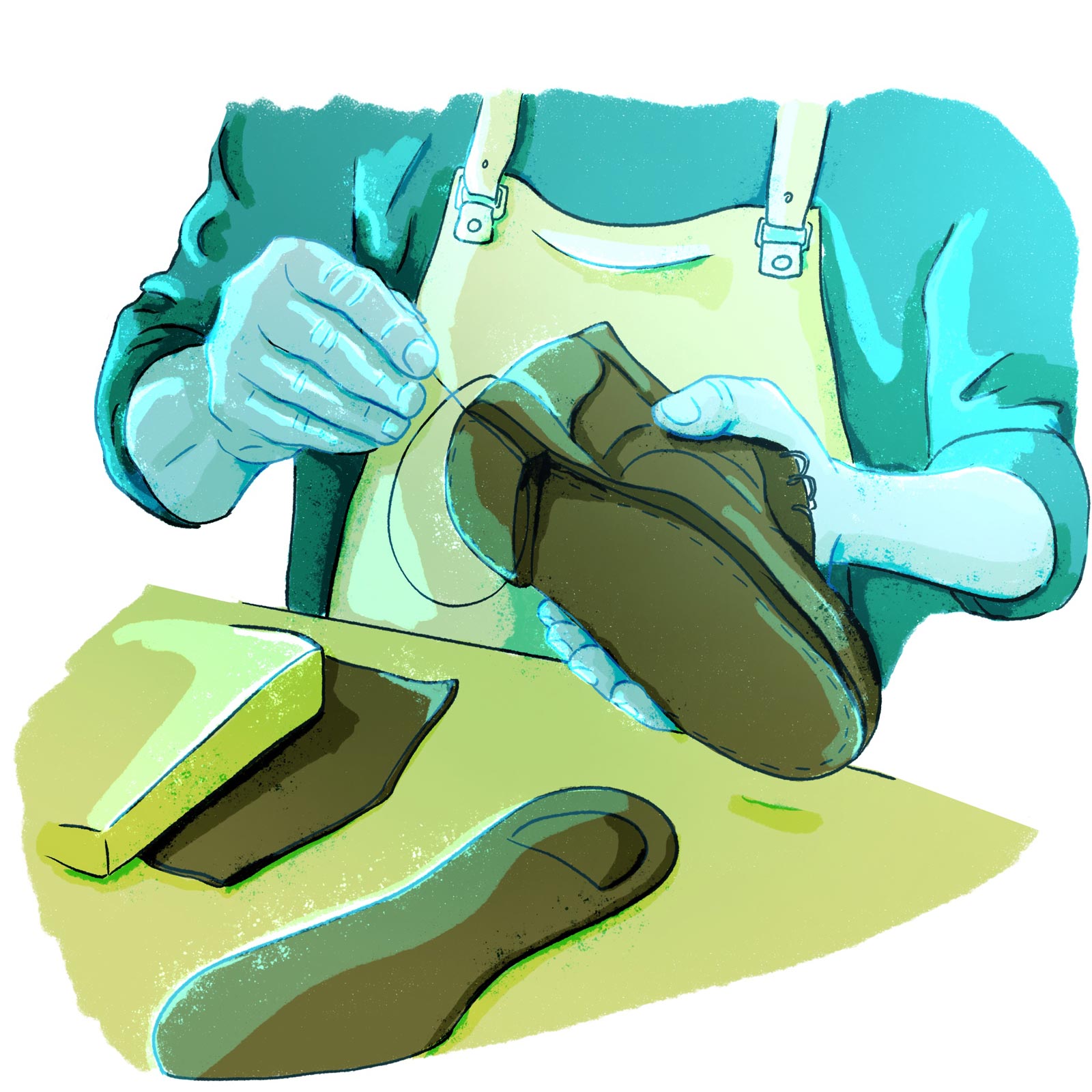
To afford ‘the luxury’ of a pair of hand-stitched leather shoes, suitable for every day of the week, families of days gone by would save for months, even years, paying for them with everything they had.
The same applied to daughters’ dowries or men’s ‘gold jewellery’, to be passed down from generation to generation. The few valuable possessions they owned were paid for with a lifetime’s savings.
Those ‘luxuries’ were anything but vices to be flaunted. On the contrary, they were cherished, safeguarded, preserved and repaired so that they would last. For one more season, for one more child, for another harvest.
Today, in this age of overabundance, luxury can once again become an ethical choice, just as it was back then. Indeed, even more so.
In our current way of life, characterised by a voracious appetite for trends and disposable goods, choosing to invest in value is an act of conscious resistance.
The illusion of possessing luxury is what makes us feel either in or out of the celebrities’ party – the entry ticket, the stamp on the inside of our wrist. Ethics, in this distorted context, is the extent to which we can demonstrate the authenticity of our status – the winking nod from the doorman inviting us in. You in, you out.
We are increasingly confusing value with price, convincing ourselves that the affordability of an object, a fashion trend, or – in fact – an excess is an advantage, a privilege. An achievement, we are keen to point out, that is by no means democratic.
We will pay for it – the sum of the costs – and the bill will be rather steep: an impoverished and weary future, corroded by the opulence of the present. Tomorrow risks being born bereft of value and the energy even to be imagined, let alone rebuilt.
True contemporary luxury lies in what is designed and crafted to endure or to last forever. Resistance to wear and tear, the proud nobility of a material that withstands the passing of the years without losing its integrity.
Nature that continues to give of itself, to give to us.
Foresight
An alternative to the destructive cycle of ‘produce-use-and-throw-away’ does exist and is, likewise, within our reach. We can demonstrate respect for our surroundings through our vision, pushing the boundaries of our imagination and visual perception to the very limits of future generations.
In design and architecture, creating spaces that embrace the future as well as the fleeting present requires the courage of genius – which, as a living species, we have always possessed: to reverse the hierarchy of time.
Respect for the Earth, supporting it in practical terms, lies in the naturalness – imperfect yet authentic – of matter: a living body that absorbs light, supports our steps, embraces the history of places, and is enriched over time.
This form of respect for materials requires a higher initial investment, just like that of our grandmothers’ ‘good’ shoes.
The ethics of luxury, as they used to say.
Recognising the true value (not the price) at source means safeguarding precious resources that would otherwise be consumed by the relentless drive towards the overproduction of the ever-new. And what, then, becomes of the old?
A structure that does not need to be dismantled, renovated or replaced after just a few years is one less building site weighing on the ecosystem.
And on ours.
And, let’s repeat, on those of future generations.
Designing a product, a building or a floor with foresight is the true sustainability of this millennium: the ability to build something now that will also serve tomorrow.
Conscious resilience
What could a raised floor possibly know about conscious resilience?
It emerges from the industrial incubator beautiful and finished, ready for dispatch. It does not yet know its DNA, what its very essence reveals. It will discover this through ‘living’: installation, dismantling, recovery and rebirth.
Nesite’s production is rooted in a sustainable and innovative vision: to design for the long term. From Monday to Sunday, for yet another floor, another room, another life. Every panel is designed to be lifted, repositioned and maintained over time, without needing to be demolished or disposed of.
Its modular, accessible and inspectable nature allows the space to change, to evolve, to accommodate new technologies or new uses, eliminating waste, rubbish and the discarding of the old.
And it’s never really ‘old’, anyway.
Souls
It’s not just us living beings who have one.
It is said that even the things most dear to us – those odd little objects we insist on keeping over time, carrying them with us through various house moves, work transfers or long trips abroad – have a soul.
If they didn’t, it would be oblivion.
Is having a soul not a luxury, after all?
The soul is the inner structure – both our own and that of objects – for which we feel deep affection and care. We look after it so that it may sustain us and stand firm, proud, until the end of our days.
Whatever trials we may face.
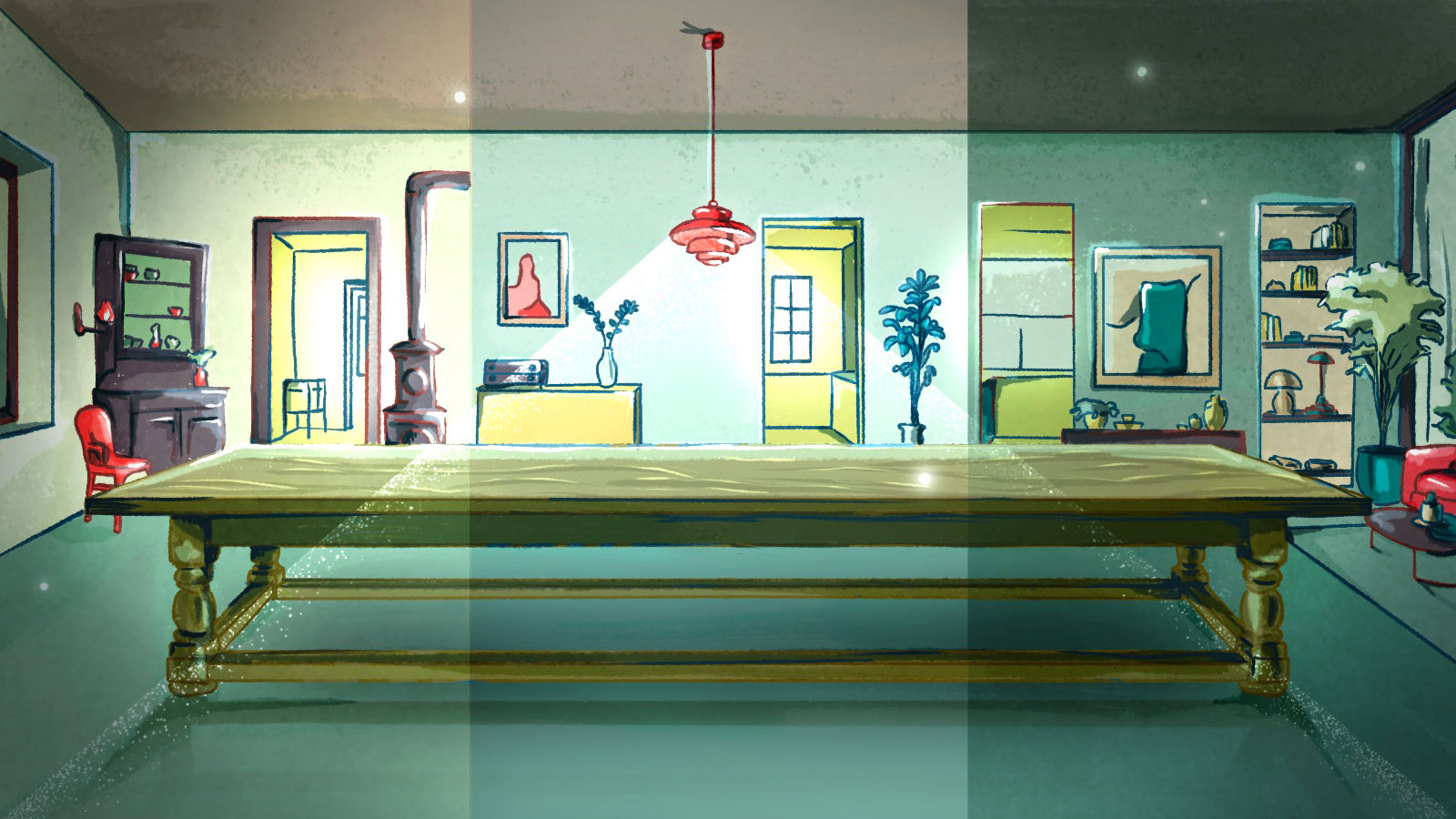
Even a house has a soul; how could one deny it? So too does a park, a ballroom, a theatre.
Places that stand the test of time, where we can come together, recover and rebuild.
The Ethics of luxury | Umaneco by Nesite ©all rights reserved
Texts edited by Chiara Foffano – Illustrations by Ariele Pirona
 Megiston