
Product
JUNO LED
Application
Interno
Location
Qatar
Contractor
Man-Empty Joint Venture (MEJV)
Design
Opera Amsterdam
Home / Projects / Museums /
National Museum of Qatar – Family Exhibit, the raised floor becomes SMART
An innovative and immersive guardian of culture, the National Museum of Qatar designed by Ateliers Jean Nouvel is one of the most complex buildings ever built, an emblem of the perfect collaboration between architecture and structural engineering.
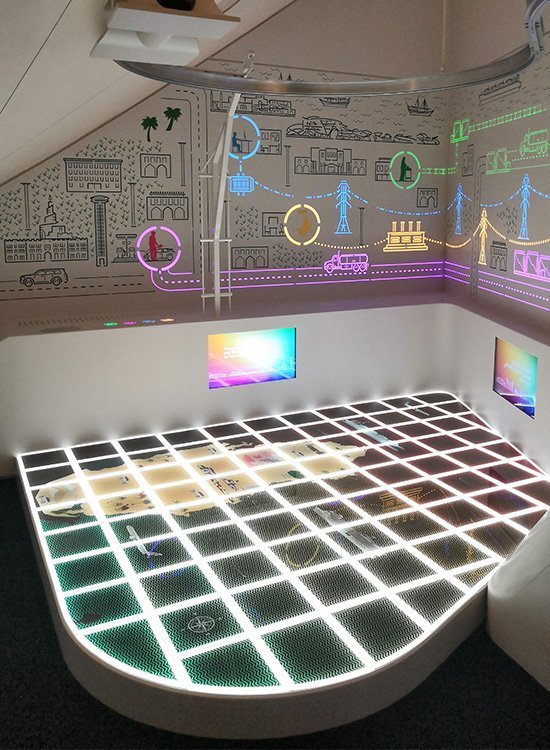
The museum houses a one and a half kilometre long exhibition path, where the permanent exhibition unfolds in a sequence of eleven interconnected galleries. Alongside the meanders of the permanent exhibition, six areas have been created where history comes to life in an exciting, innovative and immersive space. A mesmerising yet educational place, where each exhibition has its own storyline, distinct style and unique interactive entertainment.
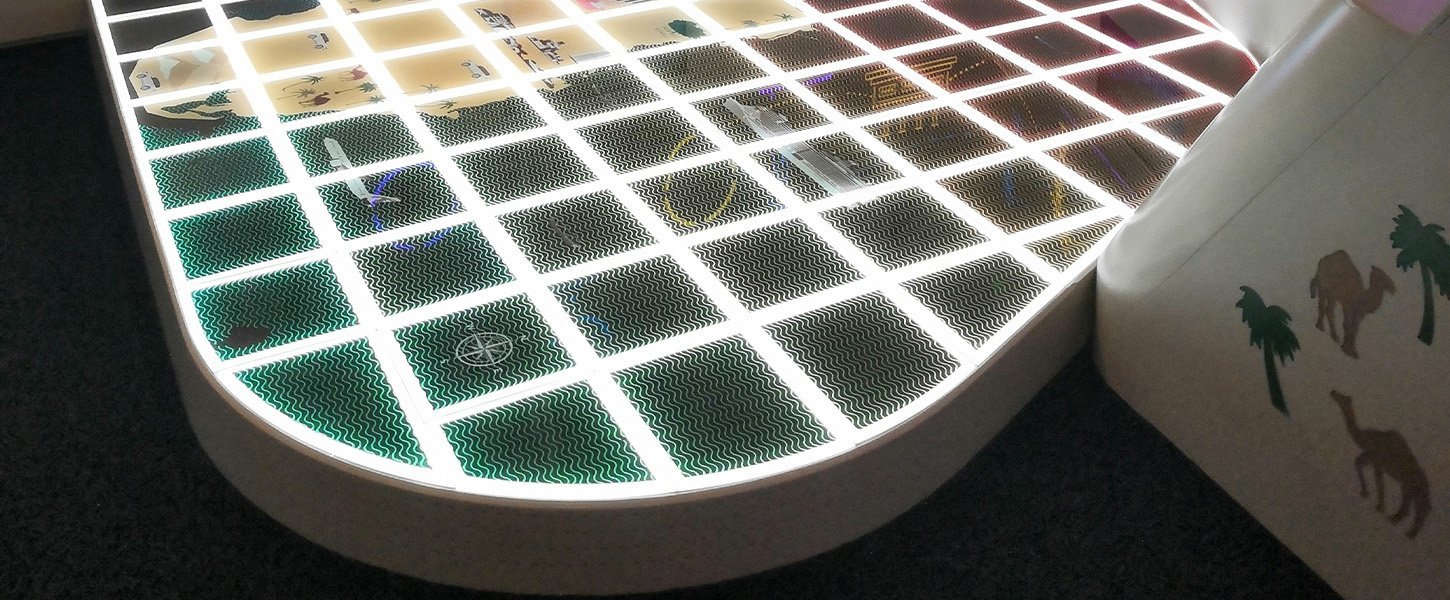
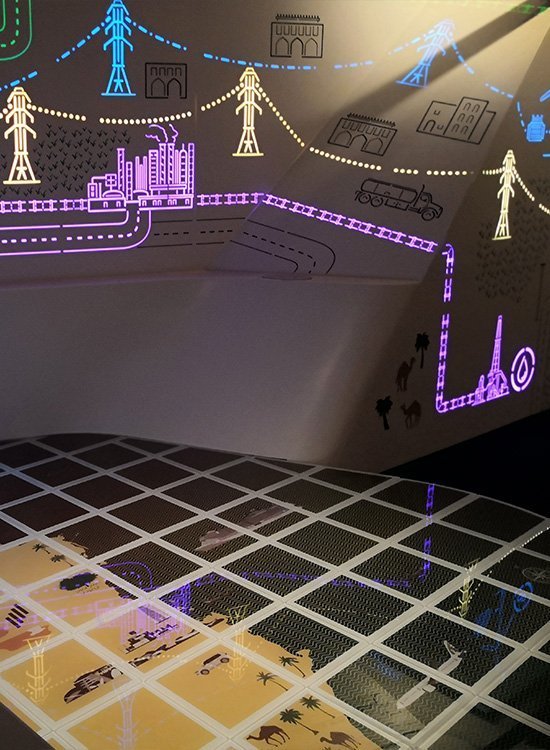
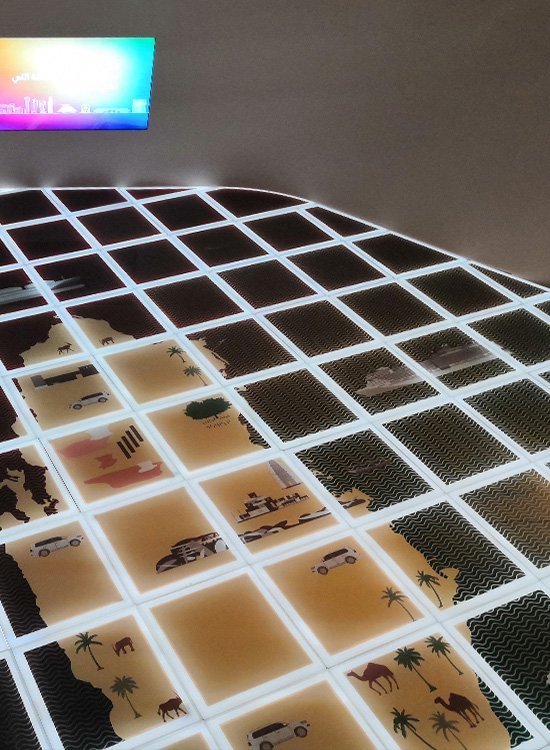
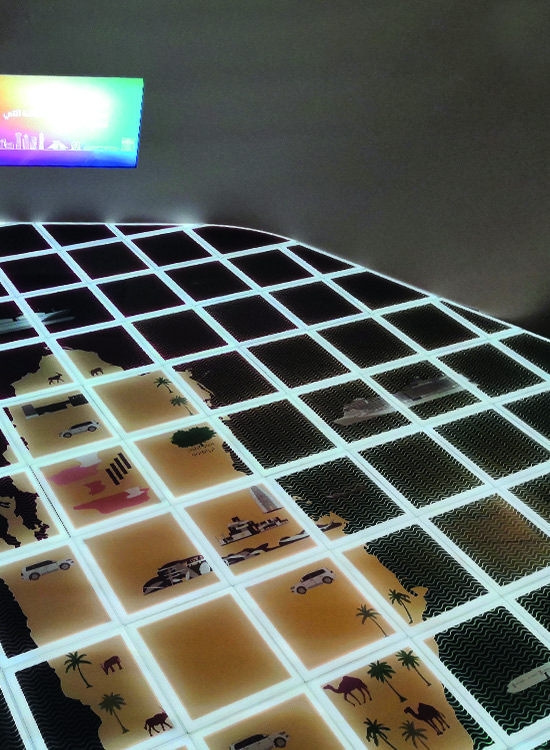
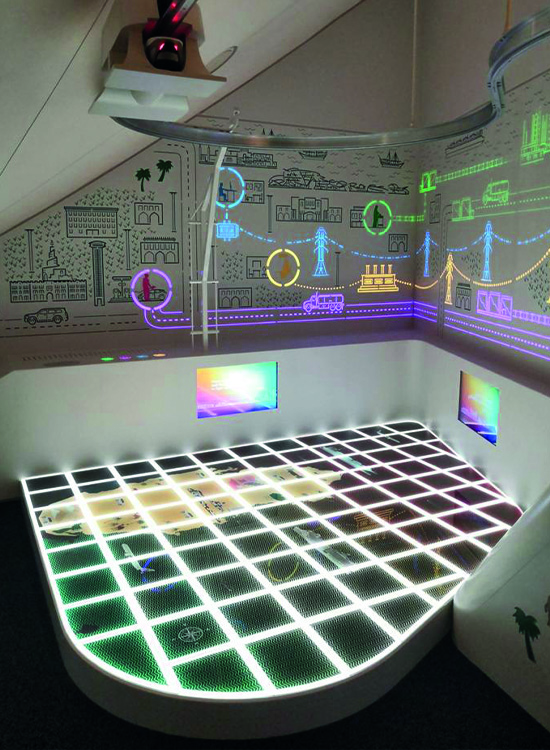
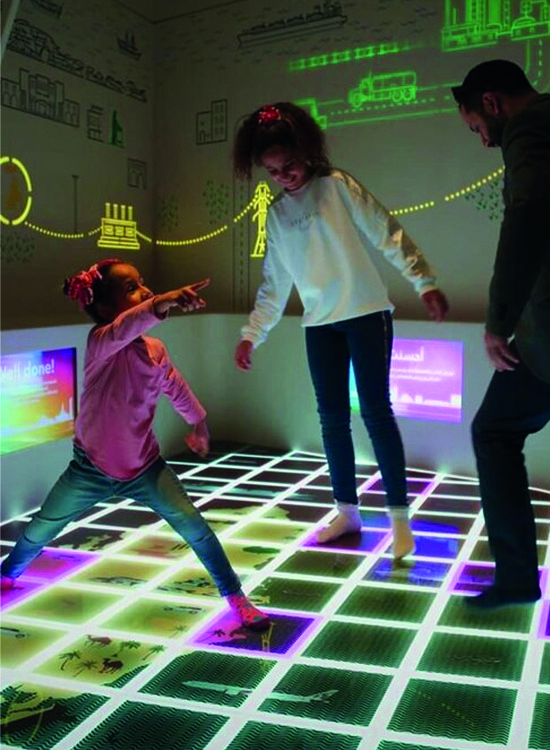
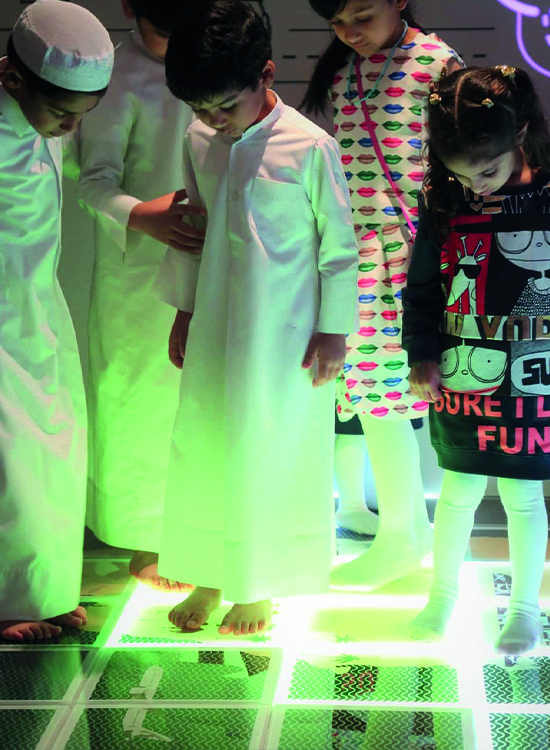
It is in this context that our raised floor becomes an interactive twister-style play platform, where little ones answer questions by placing body parts on the tiles, which light up and change colour. The island is made entirely of JUNO LED panels and responds to touch inputs through the integration of special software.
MATERIAL SUPPLIED
• raised floor composed of JUNO panels with printed glass surface, special size 300×300 mm© Photography
Studio Louter
Man-Empty Joint Venture (MEJV)

Products in this project
All Products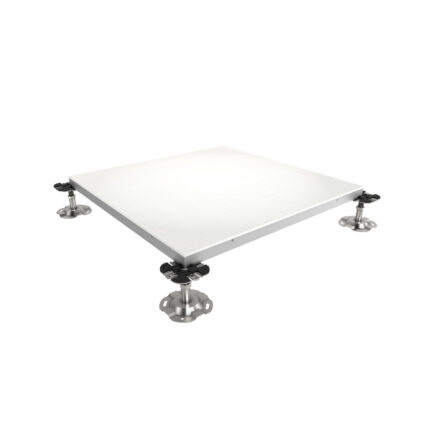
Systems
JUNO LED
JUNO is the new high-brightness LED walkable panel Designed to fit inside raised floors. Designed to fit inside raised floors, JUNO allows you to create paths of light or highlight objects with maximum flexibility. JUNO has a very low energy consumption, with a minimum duration of 30,000 h and absorption of only 30 W. Juno
Other
projects
All Projects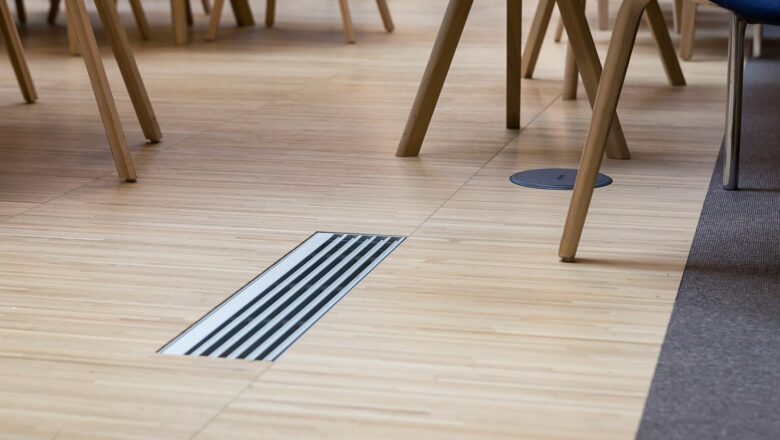
Wilberg Atrium, Norway
Wilberg Atrium is the multifunctional building signed Griff Arkitektur, designed to achieve the maximum energy efficiency. It was completely equipped with a UFAD (Underfloor Air Distribution) system integrated by the Nesite raised floor able to distribute the air flows in the heating and cooling operations.
Farmalabor HQ, Canosa
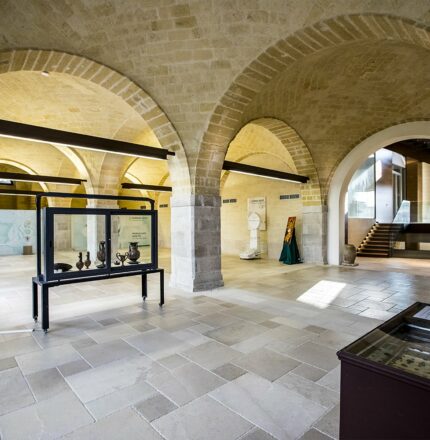
Restructuring an old factory and transform it into a cutting-edge production center: we talk about the new Farmalabor headquarters in Canosa, a Nesite Contract project in which the charm of the past coexists with the most modern technologies.

EF Solare
New look for EF Solare of Trento, the first photovoltaic operator in Italy. The headquarters has been completely renovated in the interior, a new interpretation of aesthetics and space by arch. Danilo Vespier – studio Vespier Architects.
 Megiston