
Home / News / humaneco /
The word “place” has all of the following definitions:
a set of points, the position of a star in the sky, a portion of space whose boundary is the Earth’s surface or the immense globe. Furthermore: a piece of land, a building, a populated area, the right moment. A passage from a book, a specific topic.
None of these meanings involves belonging or ownership. Because a place, any place, has a free soul: it is everywhere. Its boundary is, in fact, the immense globe.
What matters most to us is where we belong. The soul of that ‘where’ becomes our very presence.
The soul of a place
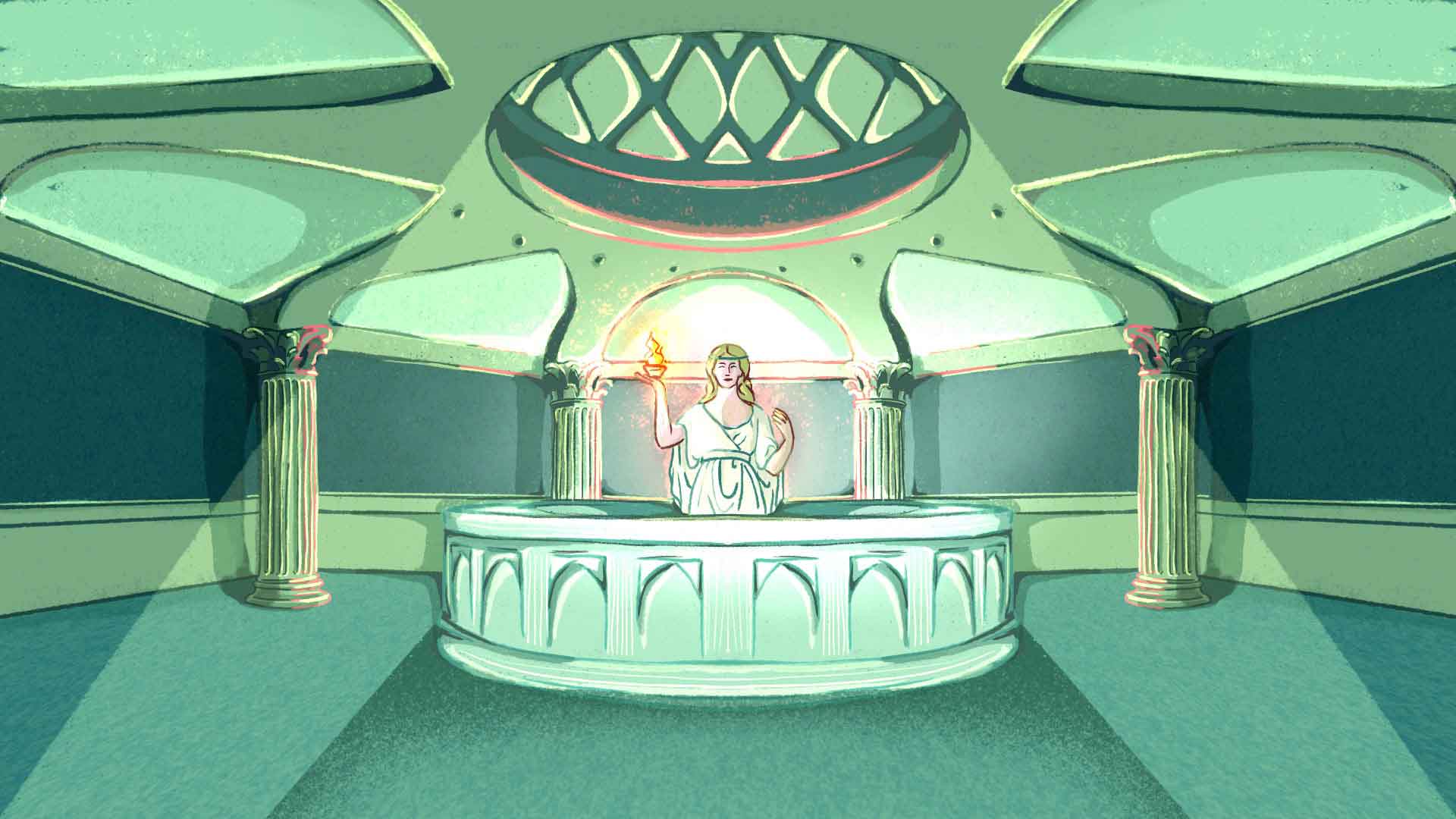
In Roman religion, the genius was a protective goddes, the energy, invisible to the eyes – but not to the heart, specific to a concrete and circumscribed locus. It watched over the spaces inhabited by people (a piece of land, a convent, a town) and the activities that took place there, marking the rhythm of time and lives.
A deity that was not to be sought among the stars, but rather at the table with families, for dinner and, later, to tuck the children in at night.
A domestic spirit.
The Genius Loci is the distinctive character of a place, its soul. The same one we recognise when, for the first time, we cross a threshold without any expectations and find ourselves thinking – in a low voice – ‘I’m home’.
The bond we feel has to do with certain roots. Perhaps those of the past, but above all those of the present. And almost always they are our own, which sustain us in the moment we are living.
Here we feel we want to stay.
Possession has nothing to do with it: the soul of a place is free, remember? Volatile, like the stars in the sky. It is about comfort, trust, protection and belonging.
Of closed eyes and deep breaths.
Of relationships and woollen blankets.
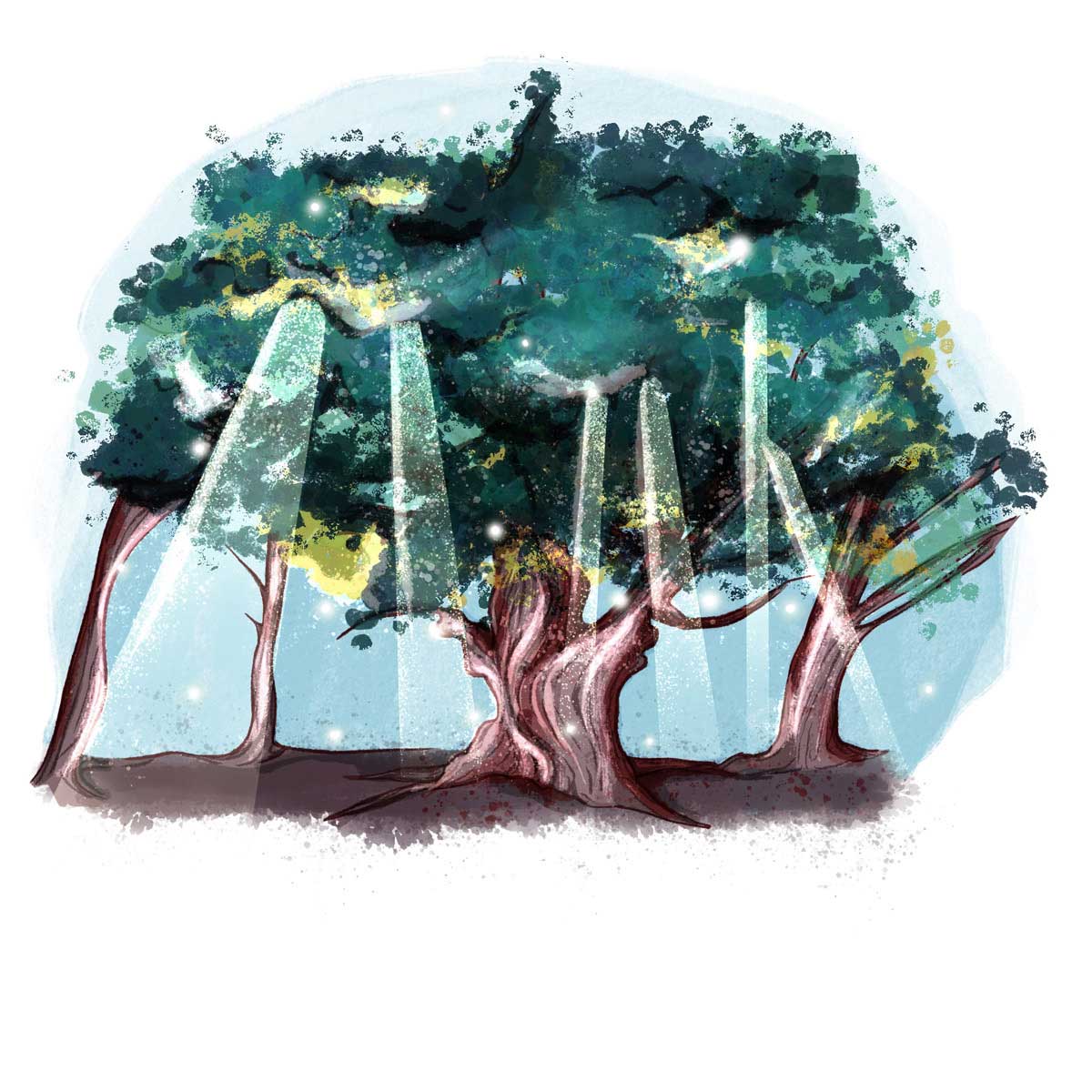
Whether it’s a forest, a living room, the back balcony or the waiting room.
There, you feel you can stay.
The story from the beginning
In architecture and urban planning, Genius Loci is the philosophy behind designing a space: respect. Respect for the environment, for history, for the social and cultural dynamics that already inhabit that place or will inhabit it.
Designing, therefore, before assigning a form to a space, means paying attention and caring for our surroundings. With that respectful feeling and philosophy that also have to do with roots. Not of the past or even the present, this time. But of the future.
Yes, the roots of the future are here, in the energy of this concrete and circumscribed environment.
Whether it is a forest, a room or the immense globe.
The energy of a place is equivalent to ‘A’ in music: it is the keynote of an entire melody, the first act of every new project.
And to tune into that place, to want to stay there, you need time.
You need to stop long enough to let yourself be struck by the silence, by the direction of the light in which the dust dances, by the way the air seems to circulate before settling who knows where, by the shadows that, in the wheel of the day, return to sleep in the same corner.
Observe how people cross the space, how they move, where they slow down, step aside and meet. They also dance and settle.
Listen to the whole story, from the beginning. Every place has one, and every place tells it before it is told. It has its own specific grammar, commas and quotation marks, suspensions and questions. Full stops and new paragraphs, too.
Time is needed, therefore, to recognise that something already exists, that the story is now and that we are the characters and we are involved.
Living is a relationship
The faded welcome on the doormat, now worn out.
The glass door of the office that, so as not to leave a trace of your passage, you push with your left shoulder, even today.
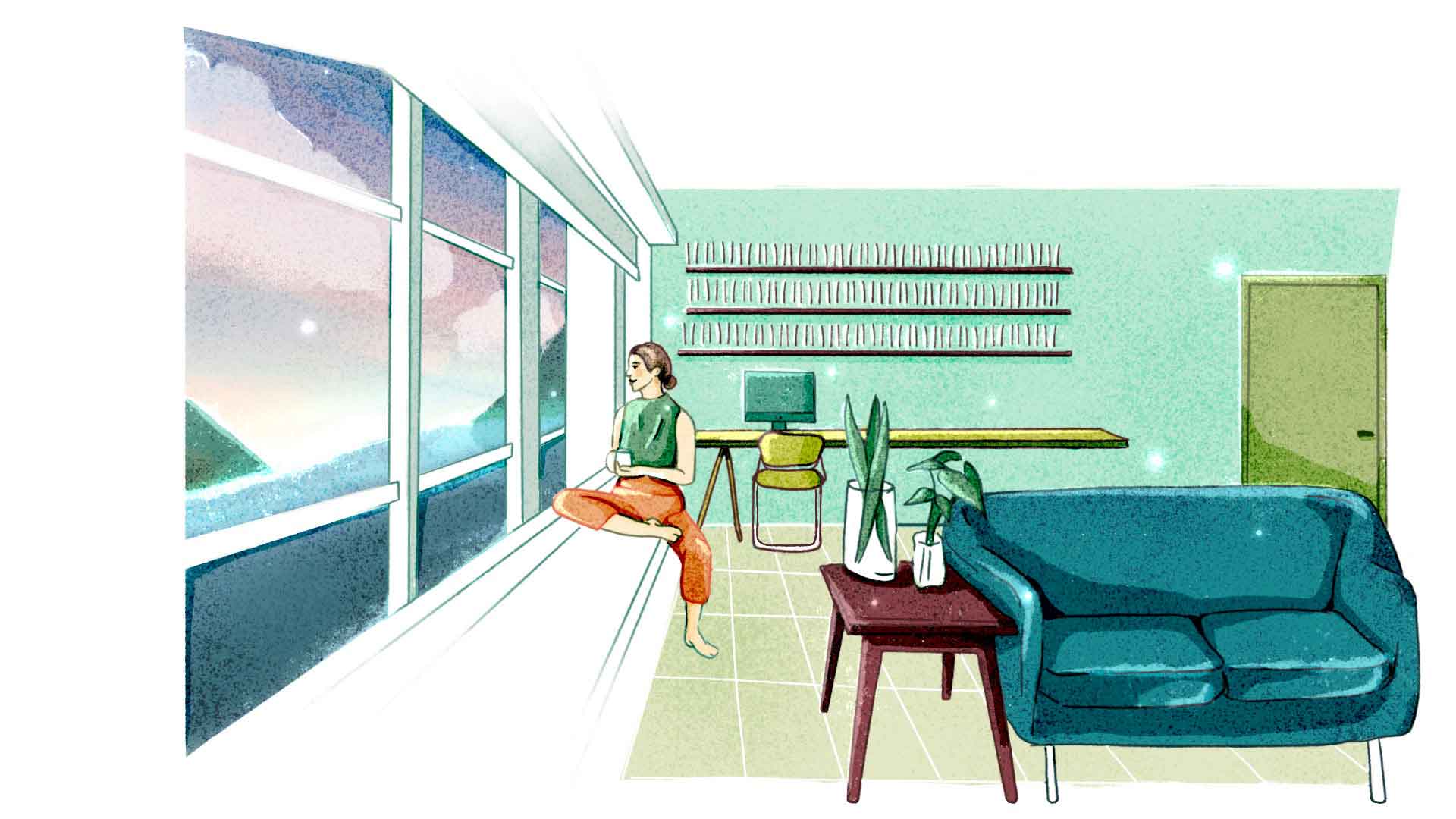
The window above the sink opens onto the same horizon every morning at dawn. It is a certainty, more so than the dawn itself.
The floor, every floor: without it, we would not be able to stand or stay.
We have a relationship.
A relationship with our living space.
The way our body, our presence, attunes itself to the ‘la’ of an environment, becomes belonging in the repetition of simple, everyday gestures. Secure.
The Genius Loci is a dancing deity, just like dust and stars: she renews herself with every life lived. She changes and adapts, becomes a fertile refuge, grows enthusiastically, is joy and is prison. She runs away, hides, is reborn.
She, like the soul of everywhere, never dies.
Genius Loci | Umaneco by Nesite ©all rights reserved
Texts edited by Chiara Foffano – Illustrations by Ariele Pirona
 Megiston