
Home / News / humaneco /
Seven lives like cats, according to popular tradition.
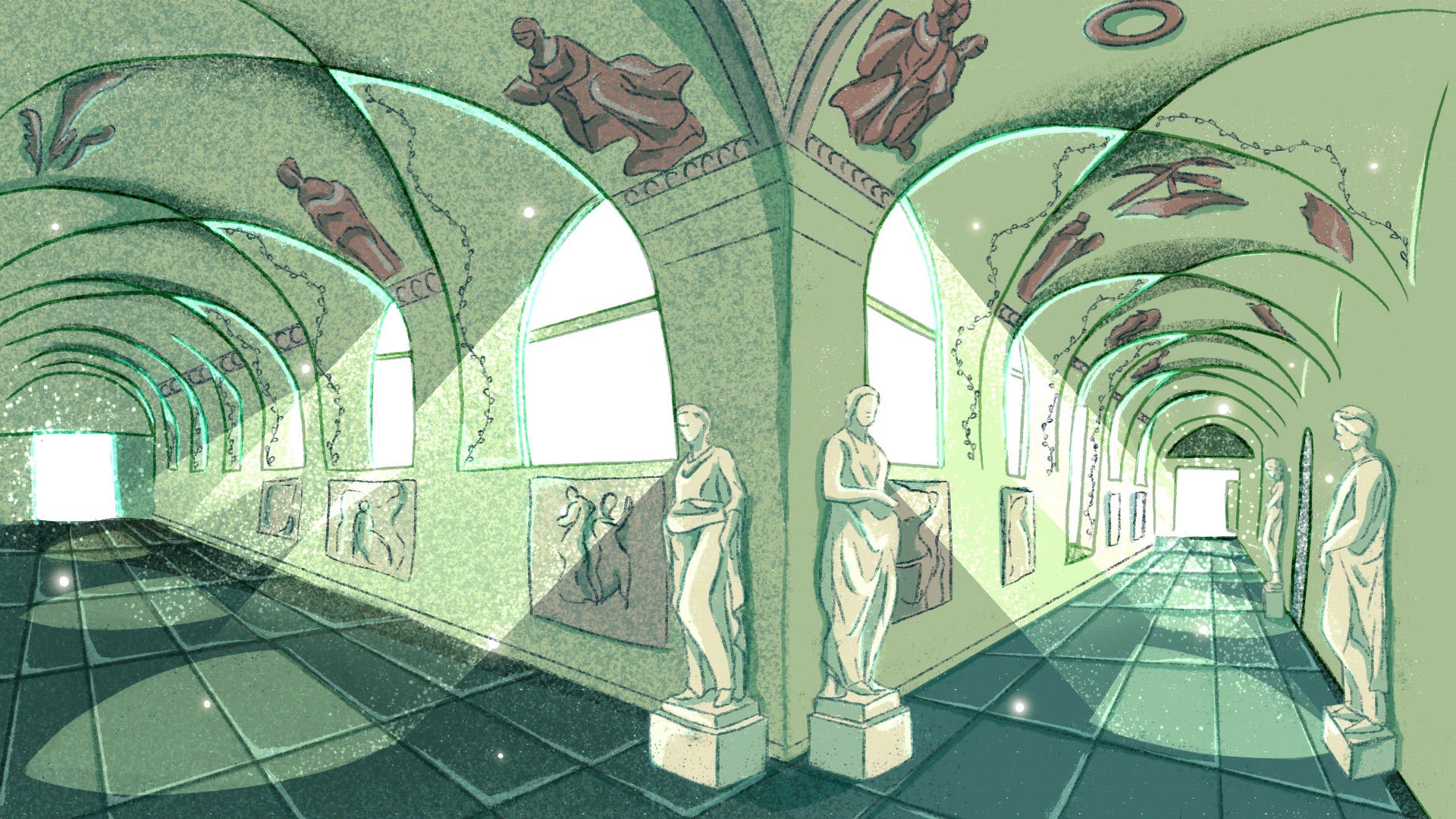
How many lives can a place have? The Hospital of Norcia has almost as many. Founded as a Franciscan monastery around 1500, it housed orders of minor and reformed friars for three centuries, until it became a local hospital.
Resistant to the wear and tear of time, to the tremors of the Earth, to the consumerism of tourist development. Closed and inactive for almost fifty years, it is now being restored to return its healing function to the Umbrian community.
The space is being reborn into yet another life to welcome human frailty, alleviate it and restore dignity through beauty.
Time is not lost
Time passes, slips away. It seems lost forever. But fortunately for us, there are places where it is possible to re-read its passage clearly.
These are places where time has passed, but has not been lost.
Art confirms this, a faithful witness to the most varied forms of beauty, preserving time for us, allowing us to return to the wonders of those who came before us, necessary for our existence and our evolution.
The Hospital of Norcia has lived all its lives aware of a single vocation: to care for people, beyond science, through beauty. Its original frescoes tell of communion, benevolence, tenacity and resistance, values as necessary for healing as they are for living.
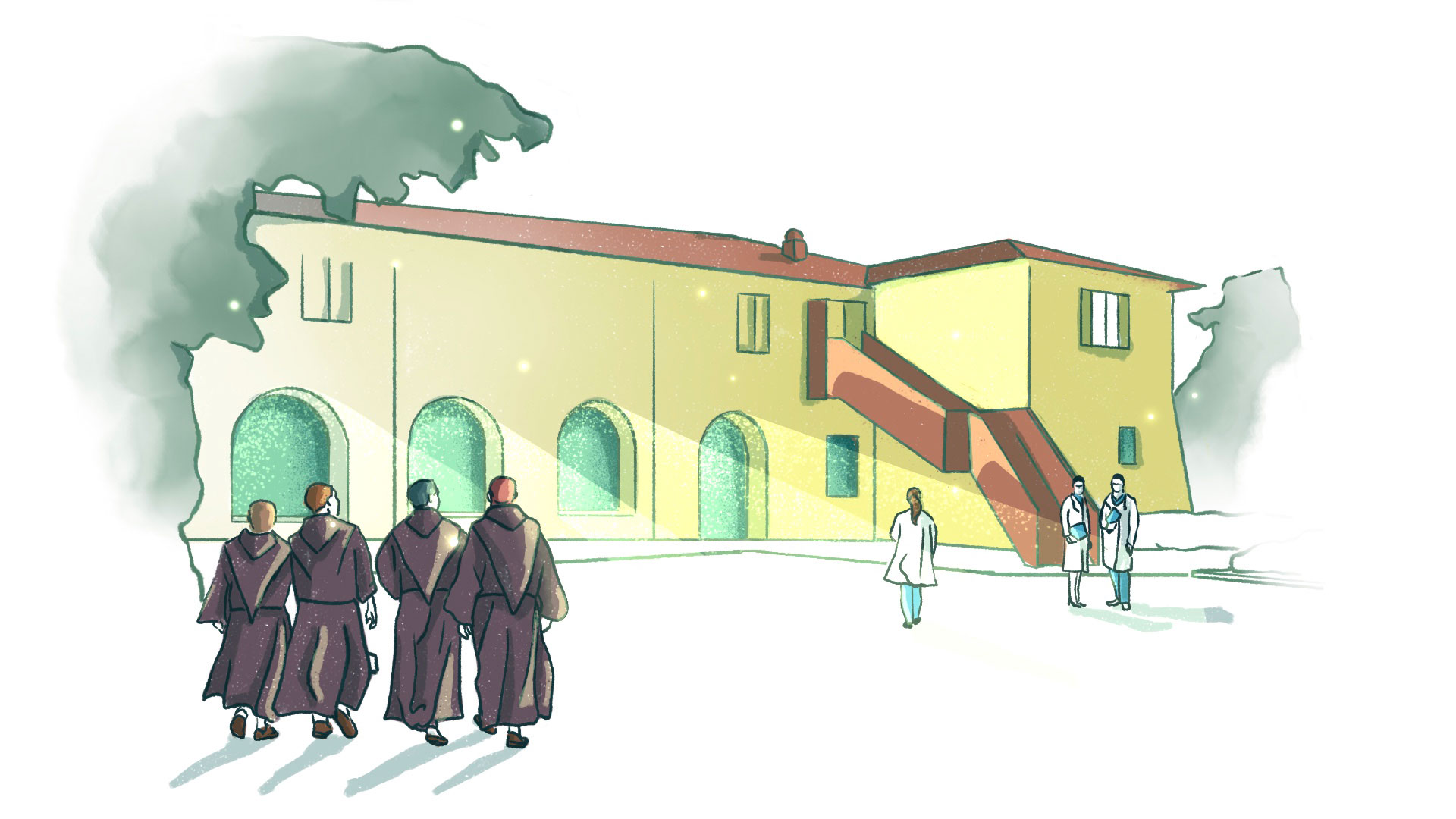
Designing a healthcare space in a place of historical value implies a profound responsibility to give people technical expertise and architectural innovation , without betraying its origins and the memory it contains.
A place is never neutral; it changes and evolves. And so do we.
The psychology of the environment
We can feel ‘at home’ elsewhere too. A sense of protection allows us the freedom to move around safely and at ease. On the contrary, that same elsewhere can put us on alert, inhospitable as it is: we feel out of place, uncomfortable, in danger.
Everywhere else, environment and space are contexts that actively modulate our perceptions, our moods and our physiological responses. Space and wellbeing have a relationship that is by no means trivial. And in the middle is our living, the lives of people.
Various ancient disciplines, even before modern science, observed and regulated the relationship between human beings, space, nature and time. Feng Shui, now widely practised, has always recognised the influence of the arrangement of spaces, flows, thresholds and orientations on people’s physical and emotional wellbeing.
Environmental psychology translates these insights into scientific language, analysing how the configuration of a space affects stress levels, emotional balance and even the biological timing of healing.
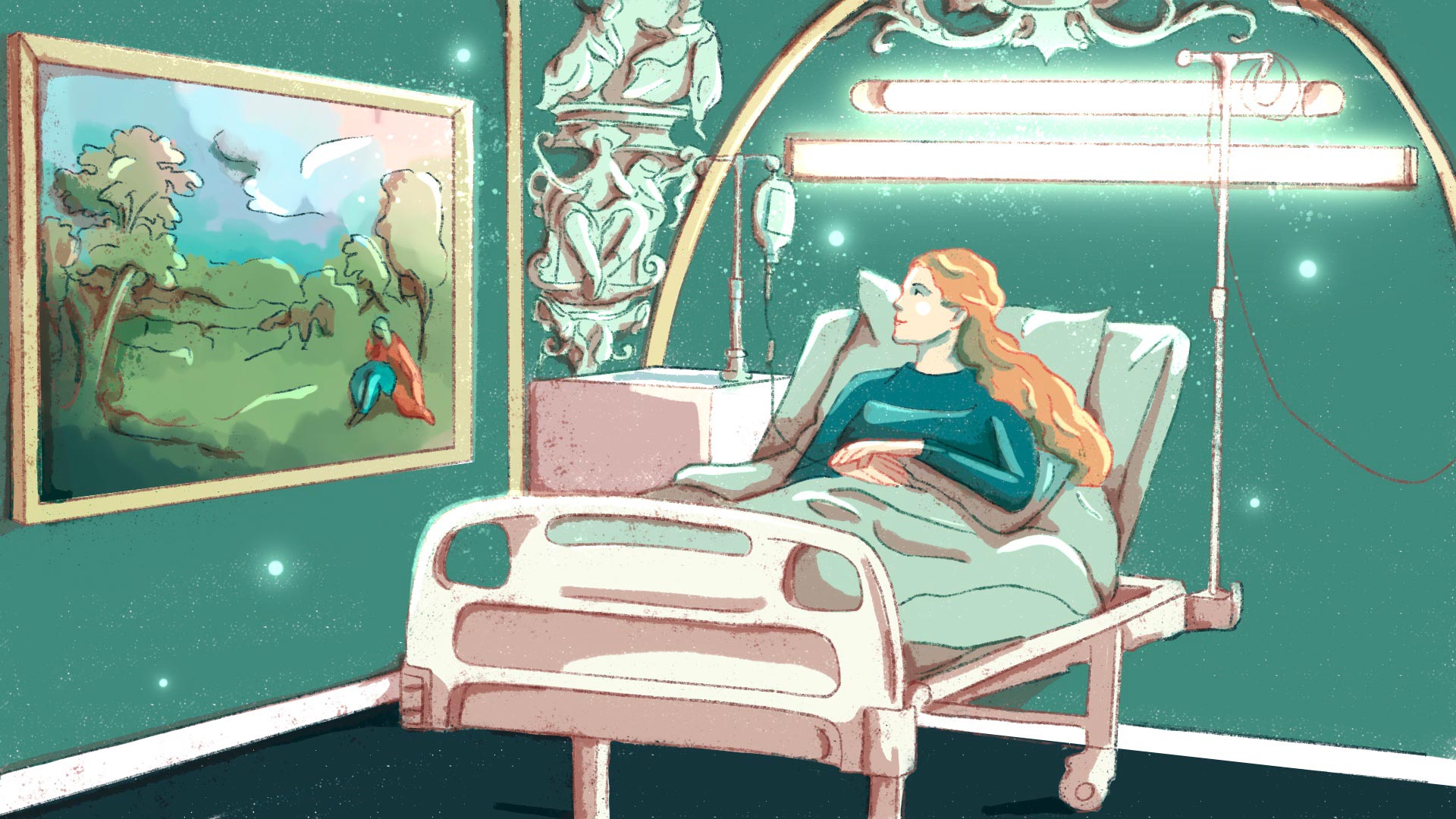
To this end, architecture promotes healing processes that recognise the person in their entirety and complexity.
The Art4ART project at the Policlinico Gemelli hospital in Rome demonstrates how the presence of works of art throughout the hospital has had concrete benefits in managing anxiety, pain perception and the quality of experience for patients and their families.
Similarly, the ‘Giardino Sensazionale’ (Sensational Garden) project (Casa di Giò, Cooperativa Germoglio) transforms an outdoor space into a multisensory ‘ ‘ environment capable of stimulating the senses, fostering relationships and offering a time of regeneration to those who experience it.
Architecture and psychology are vital organs of the same body, of the same project: the future, still possible, of people.
Art below and above
In the restoration of the Norcia Hospital, the dialogue between different temporal dimensions is a conscious design choice for the evolution of the building, which continues to perform its function of care without losing its connection with its past.
Every intervention is related to what already exists; the space is free to change while remaining itself. Technique and memory are held together, history becomes an active presence, capable of improving the experience of those who pass through these places. A balance that finds expression in gesture, in matter, in solution.
The protection of historic surfaces and the evidence of the original structure remain central: what has been continues to be visible, recognisable, present.
Nesite raised floors allow the distribution of installations, cabling and service systems within an accessible technical space, avoiding invasive interventions on historic walls and period frescoes. Complexity remains hidden, serving the functionality and continuity of the place.
As in Mater Materia, the floor supports the change in the space, while remaining faithful to what has been and open to what will be.
The places where we live, where we reside (even those we live in despite ourselves) affect our quality of life.
And beauty – all of it, visible and invisible, whether we believe it or not – is necessary for human well-being.
Beyond care, Art | Umaneco by Nesite ©all rights reserved
Texts edited by Chiara Foffano – Illustrations by Ariele Pirona
 Megiston