
Home / News / humaneco /
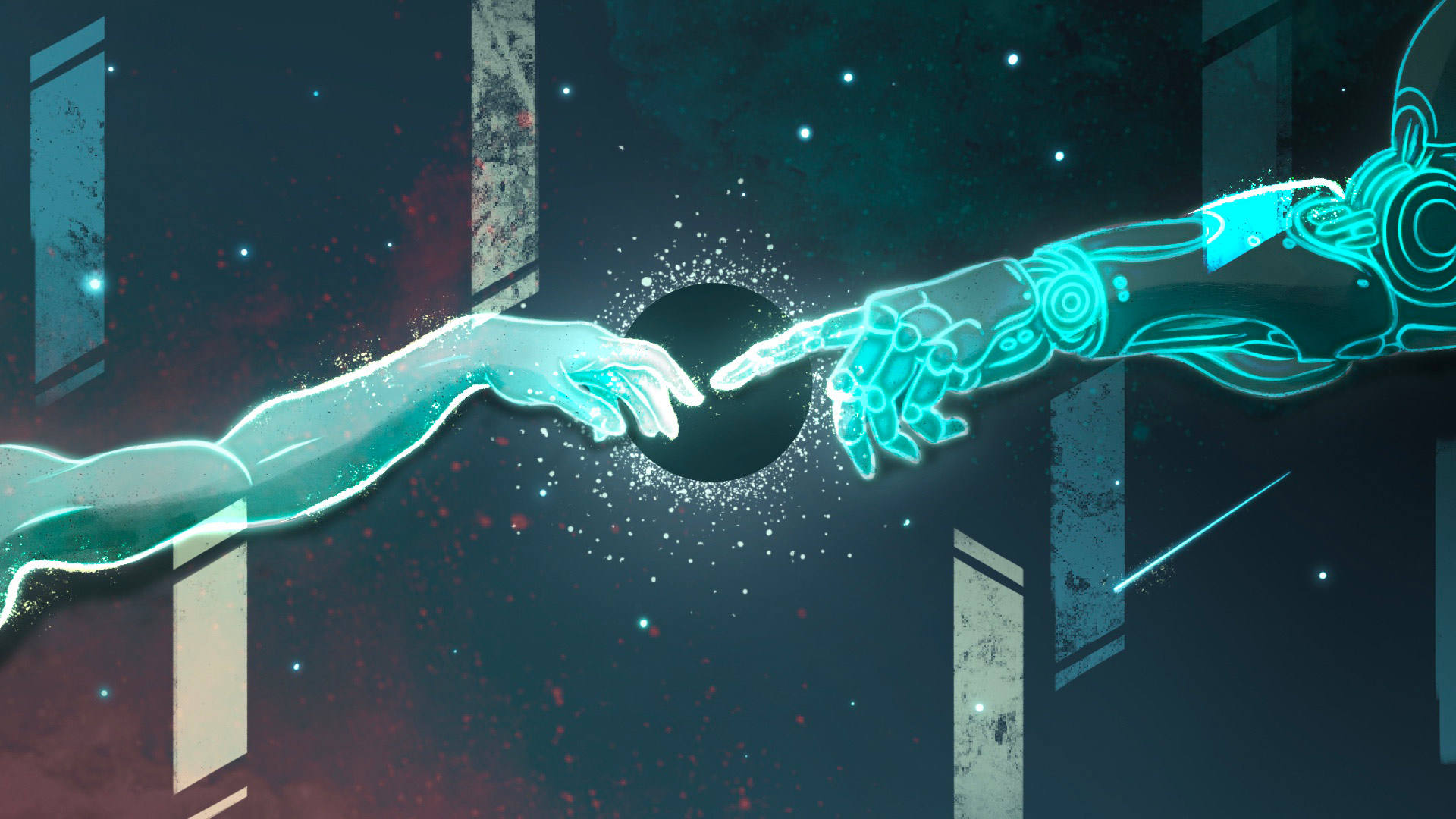
Is our intelligence today better, or artificial intelligence tomorrow?
Every revolution of the past has grappled with its own version of this question. Steam engines, electricity, tractors. We were well aware of the path we were leaving behind for a new and daring one, in which we placed our hopes and few certainties.
A sense of responsibility is one of the factors that has allowed us to evolve as a human race, in everything we have done and continue to do. Awareness is the value that weighs up every change, balancing the pros and cons, the present and the future.
What place will human ingenuity have in the coming revolutions?
We ask ourselves this today, having evolved to the point of questioning our very necessity on this Earth.
An ecosystem of intelligences
The artificial progress we are experiencing carries the same ambivalence as a petrol-powered tractor for farm labourers and sharecroppers: it is the promise of unparalleled evolution and, at the same time, a threat to which we still do not know whether to succumb or resist.
But reality is full of nuances, as nature teaches us, in every season.
In our time, various types of intelligence coexist, all those we have been able to invent (yes, us) and embed in our lives: human intelligence, above all, the automated intelligence of machinery, the ethereal intelligence of the digital realm, and artificial intelligence, which is not yet fully understood.
This ecosystem of intelligences was born of our species, and it is reasonable to think that it is evolving towards a wholly human goal: to support people’s well-being, to improve the quality of life as a whole, and to plan for an even more distant future. If possible.
Within this balance, we have learnt to dance, to live, to work, to raise our families, to dream and to share. To keep inventing and to help others do the same.
And yet here we are, still wondering how heavy our responsibility for tomorrow really is.
Ingenuity
One of the areas in which artificial intelligence is demonstrating its potential concerns energy and resource management.
Data monitoring and analysis systems enable real-time observation and control of energy consumption, the identification of inefficiencies and the improvement of production processes.
In this, AI is irreplaceable, because we do not have all the time it does.
At Nesite, artificial intelligence will also be used to analyse data relating to consumption and production cycles, identifying the most efficient times to activate specific machinery, for how long and in what sequence, so as to reduce energy waste and optimise resources.
Cradle to Cradle is the guiding certification for this process. In a model where every resource is designed to return to generating life, artificial intelligence is the presence that makes possible what would otherwise remain merely an intention.
An ally and companion, a concrete bridge between theory and action, AI is the tool with which we honour our commitment to a circular and authentic economy. Without fear, this time.
Technology refines and elevates human work, enabling people to make more informed decisions and build a production process that is more sustainable over time.
The result of this collaboration of intelligences is measured in collective well-being—for the environment, for the quality and continuity of work, and for the people who are granted the chance to reclaim their time and creativity to continue doing what they do best: working hard.
What people say about us
The technologies we invent always say something about us. Every invention is born to fill a gap or bring a dream to life.
The driving force is human, when you think about it. We remain the first inventors.
The wheel propelled us from the muddy, dark place where we were, beyond the physical limits of our feet. Steam engines demonstrated superhuman strength in our desire to conquer new worlds. Artificial light expanded the boundaries of our encounters, boundaries that the internet then erased, transforming the whole world into a single shared space.
All these are things we lack, all dreams we still hold today. What changes is the tool at our disposal.
Artificial intelligence applied to energy monitoring heralds and reinforces the urgency of repairing our relationship with our planet. We are aware that we need help to manage it with care and foresight.
We have natural limits, like every living species, but we continue to want to understand our infinitely complex world, to love it, and to wish for it to be beautiful and healthy for all eternity.
The choice
Whether or not we are (in)replaceable, well, only we can decide that.
And in this choice lies the balance of our fear: whether or not to share in the responsibilities of existence.
Do we really want to be replaced? Do we have so little faith in ourselves that we are willing to give up our ability to imagine, to plan and to care for the world?
Human capital lies in our passion, in our ability to imagine, to interpret, to choose.
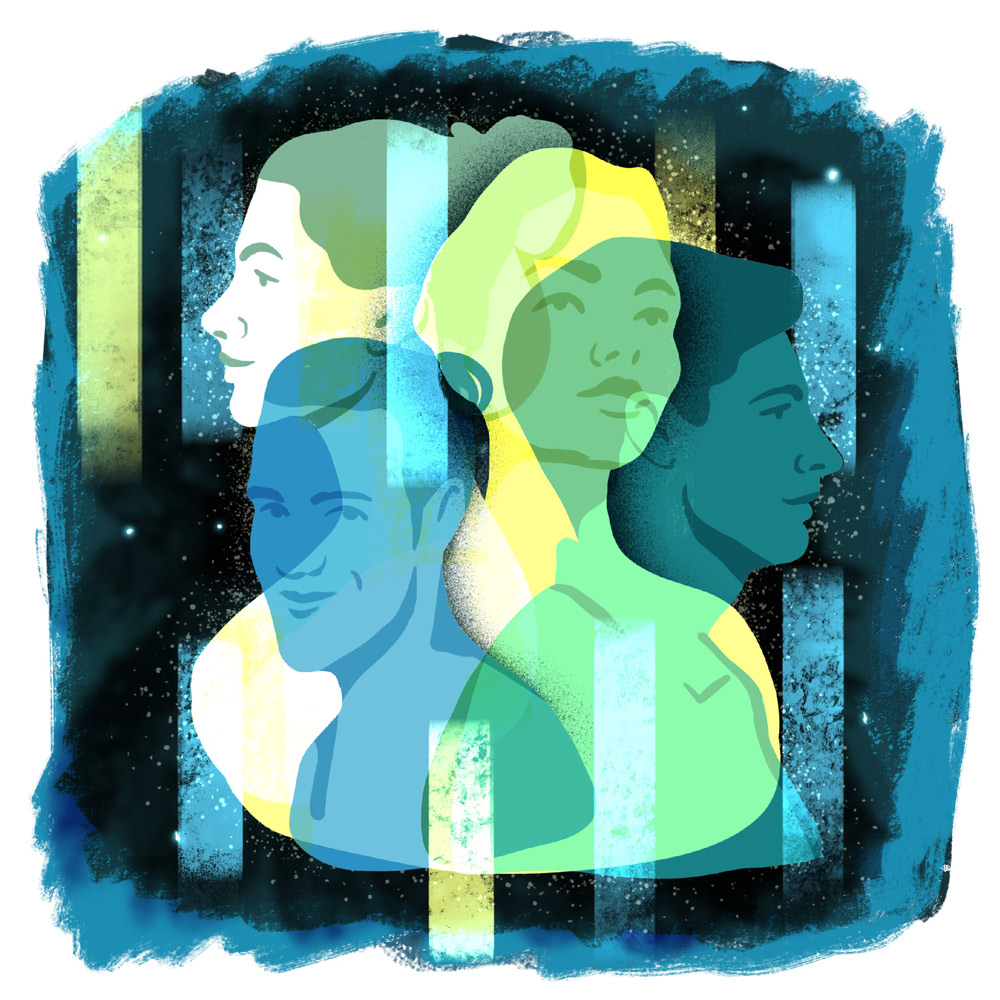
Relationships, creativity, our hands, our emotions and our stomachs: these are the things that cannot be replaced or replicated. And that is all we need, today, to live well and to face the future with pride.
The future—that of people, of work and of the Earth—remains, for now at least, our joyful responsibility.
Are we really irreplaceable? | Umaneco by Nesite ©all rights reserved
Texts edited by Chiara Foffano – Illustrations by Ariele Pirona
 Megiston